
MANUFACTURING CYBERSECURITY RESEARCH
The Patch Gap: Why Manufacturing Risks Are Still Preventable
Known vulnerabilities can remain open when aging systems, production demands, and limited maintenance windows delay security updates. Accent Consulting’s research examines patch-related findings across 21 manufacturing organizations and explains how leaders can prioritize practical fixes.
What is Manufacturing Patch Managment?
Manufacturing patch management is the process of finding, prioritizing, testing and applying security updates across production systems, business applications, operating systems, network devices and connected equipment.
Because manufacturing environments must balance security with uptime, teams may need testing, approval, vendor coordination, and planned maintenance windows before applying a fix. The NIST Guide to Enterprise Patch Management Planning provides additional guidance on managing this process.
Why Does Patch Management Matter?
Known vulnerabilities can remain open when teams lack an accurate asset inventory, clear ownership, or enough time to test and apply updates.
As a result, outdated or unsupported systems may create avoidable exposure. Strong patch management helps manufacturers understand which systems need attention and decide which fixes should come first.
The Preventable Risk Behind the Patch Gap
Manufacturers often think of cyber risk as something advanced, such as ransomware, zero-day attacks, or highly skilled attackers. However, patch-related risks often begin with known vulnerabilities and available fixes.
The challenge is not always a lack of solutions. Instead, teams may need to identify affected systems, confirm ownership, schedule downtime, test changes or coordinate with equipment vendors.
Our research found patch-related findings across all 21 assessed manufacturing organizations. The findings included 246 patch-related findings and 81 possible missing security patches.
These findings do not mean that every system faced an active attack. Rather, they show that patch and update gaps appeared throughout the assessed sample. Therefore, manufacturers should focus first on the systems that are both reachable and important to production or business operations. Review the full manufacturing cybersecurity research to explore the other risk areas.
100%
of assessed organizations had patch-related findings.
81
possible missing security patches identified.
246
patch-related findings identified.
15%
of total findings were patch-related.
Source: Accent Consulting analysis of 1,625 anonymized cybersecurity findings from assessments of 21 manufacturing organizations conducted between 2023 and 2026.
PATCH VISIBILITY
Why Patch Management Starts with Knowing What You Have
Manufacturers cannot manage patch risk without a current view of their systems, software, owners and patch status.
A reliable inventory should include production systems, business applications, remote-access tools, network devices, operating systems, and other connected assets. It should also record software versions, support status, system owners and maintenance needs.
Legacy platforms and production systems may require different approval or testing steps. Even so, teams need a clear way to track known vulnerabilities, planned fixes, approved exceptions, and temporary controls.
For that reason, patch management starts with visibility. Teams cannot prioritize what they cannot identify.
RISK PRIORITIZATION
Why Reachable and High-Impact Should Move First
Patch-related findings represented 15% of the total findings in the research sample. The analysis also identified 246 patch-related findings.
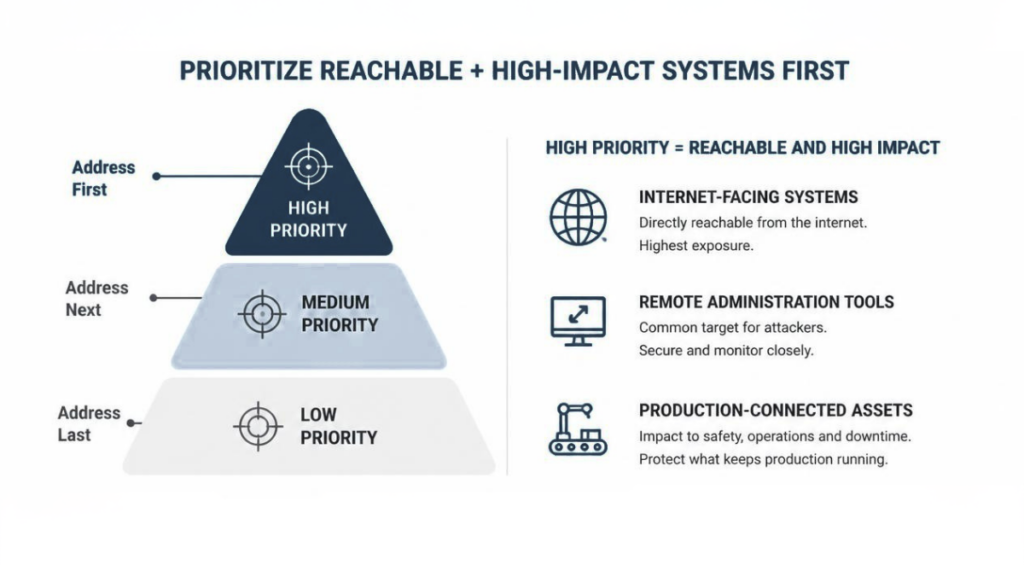
These results show why manufacturers need a clear way to rank patching work. Start with systems that are both reachable and important to operations, such as internet-facing systems, remote administration tools, production-connected assets, and systems that hold sensitive information. Teams should also consider whether a vulnerability appears in CISA’s Known Exploited Vulnerabilities Catalog.
For example, internet-facing systems, remote administration tools, production-connected assets and systems that hold sensitive information may require earlier attention.
Next, consider exposure, exploitability, operational impact, asset importance, and the availability of a practical fix.
As a result, teams can focus limited maintenance time on the vulnerabilities most likely to create business or production disruption.
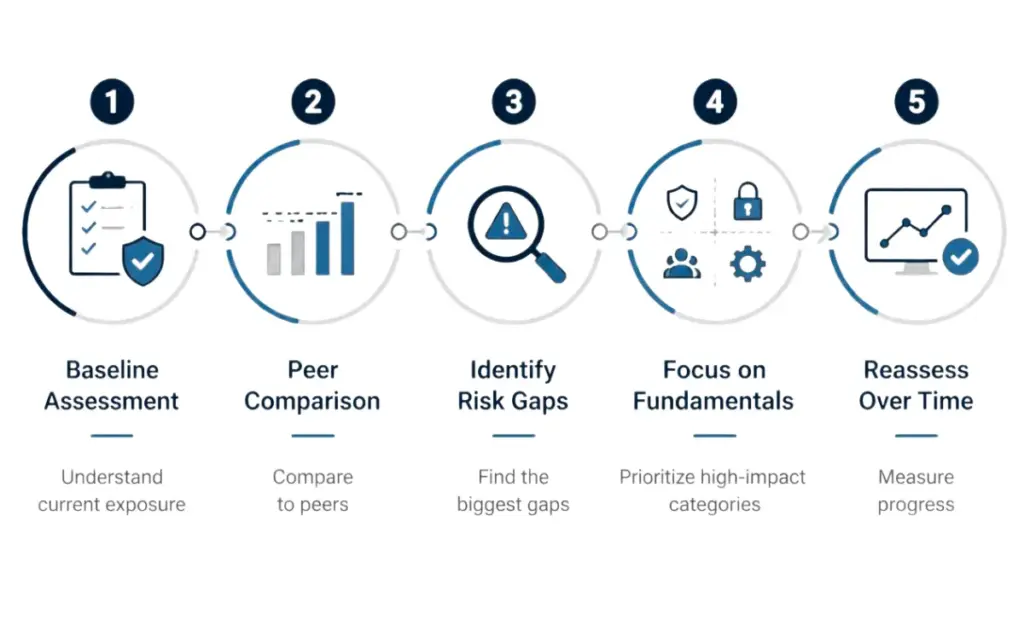
Why Patch Management Starts with Knowing What You Have.
Effective patch management depends on five connected practices. Together, they help manufacturers understand exposure, prioritize work and measure progress over time.
PRODUCTION CONSTRAINTS
Why Uptime Should Not Become a Permanent Reason to Defer Fixes
Manufacturing patching can be difficult because uptime, testing, vendor timing, and equipment dependencies are real constraints.
These factors should shape the patching plan. However, they should not turn known vulnerabilities into accepted background risk without review.
High-maturity programs use planned maintenance windows, testing, documented exceptions, and review dates. This approach does not require teams to patch every system immediately. Instead, it helps them assign ownership, document decisions, and set a clear next step.
Over time, this process can reduce avoidable exposure while keeping operational decisions visible and accountable.
LEGACY AND REMOTE ACCESS
Why Unsupported Systems and Remote Tools Need Special Attention
The patch gap is not limited to ordinary software updates. It can also involve end-of-life operating systems, unsupported platforms, production workstations, and remote-access tools that continue to support important work.
These assets may combine operational importance with elevated exposure. As a result, they can create higher-priority risks even when standard patching is not possible.
Manufacturing teams should also consider CISA’s industrial control systems security resources when reviewing production-connected assets.
Teams may need to consider isolation, replacement planning, vendor-supported upgrades, restricted access, temporary controls or closer monitoring.
Remote-access tools also require regular review. Keep them current when possible, protect them with MFA, limit direct internet exposure, and govern them like any other critical pathway into the environment.
How Patch Risk Builds
Patch risk often follows a predictable pattern. First, teams lack a complete view of their assets or vulnerabilities. Next, production constraints delay updates or other fixes. Finally, unresolved gaps remain open and may increase exposure over time.
COMMON QUESTIONS
What You Can Do Next
What are cybersecurity best practices for manufacturing patch management?
Effective patch management starts with accurate asset and software inventories. From there, manufacturers should track vulnerabilities, assign system owners, set patch priorities, test changes when needed, and document exceptions. In addition, teams should prioritize reachable and high-impact systems, review unsupported platforms, monitor remote-access tools, and reassess open issues over time.
How can manufacturing companies improve their cybersecurity defenses through patching?
Begin by identifying the systems, applications, and devices that support production and business operations. Next, confirm their software versions, support status, known vulnerabilities, and patch owners. Then prioritize the assets that combine high exposure with high operational impact. When standard patching is not possible, teams can use restricted access, isolation, compensating controls, replacement planning, or increased monitoring.
What are the biggest patch management challenges in manufacturing?
Common challenges include limited maintenance windows, uptime requirements, legacy systems, vendor dependencies, incomplete inventories, testing needs, and unclear system ownership. These challenges do not remove the need to manage vulnerabilities. Instead, they make clear planning, documented exceptions, and regular review more important.
How much of manufacturing cyber risk is patch-related?
In Accent Consulting’s research sample, patch-related findings represented 15% of the total findings. The analysis identified 246 patch-related findings across 21 manufacturing organizations. This percentage describes the assessed research sample. It does not represent every manufacturing environment or serve as a universal industry rate.
How can manufacturers reduce ransomware risk through better patch management?
Manufacturers can reduce ransomware exposure by limiting unnecessary internet-facing services, securing remote access, using MFA, segmenting critical systems, applying patches based on risk, monitoring important assets, and maintaining tested backups. Patch management is only one part of ransomware defense. Identity security, endpoint protection, network visibility, recovery planning, and response exercises also play important roles.
PATCH MANAGEMENT NEXT STEPS
Prioritize the patch gaps that matter most.
Known vulnerabilities do not all create the same level of risk. Accent Consulting can help your organization improve patch visibility, prioritize reachable and high-impact systems and build a practical plan for reducing preventable exposure.